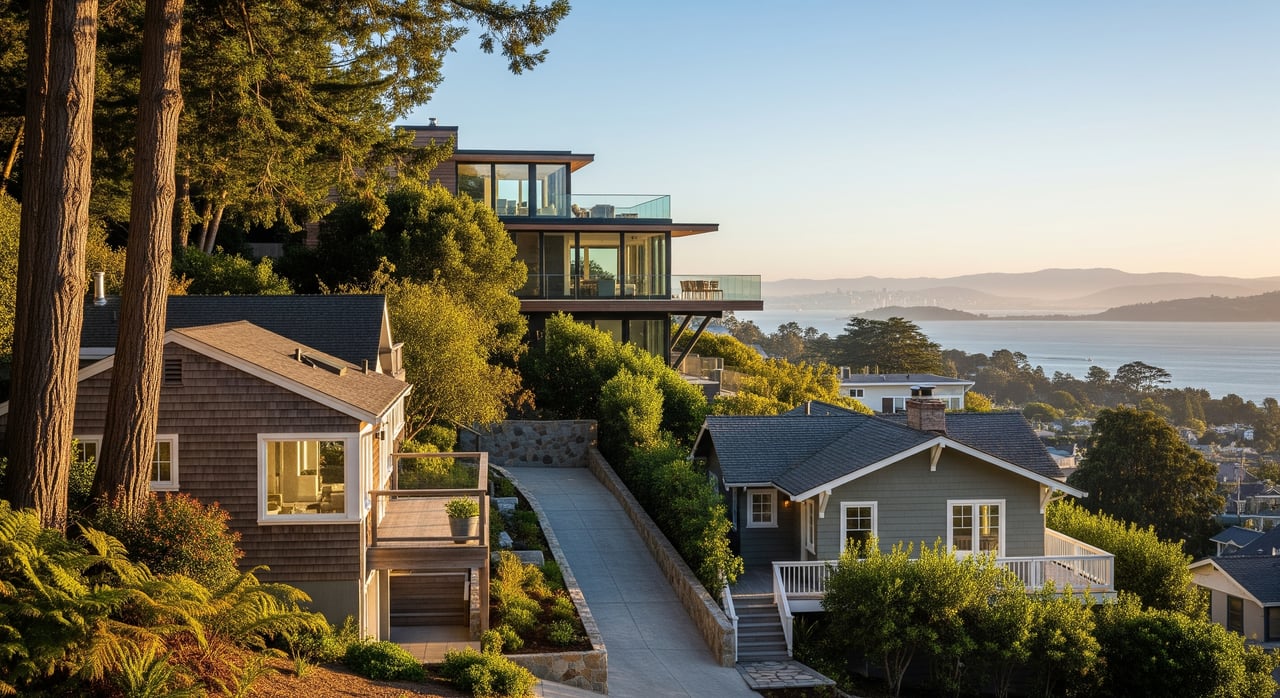
Ever notice two Mill Valley homes that look similar on paper but list at very different prices? You are not imagining it. In 94941, micro-neighborhoods, lot types, and access to trails can shift value in meaningful ways. In this guide, you will learn how price tiers typically play out across Mill Valley, what boosts or tempers value, and how to compare homes confidently whether you are buying or selling. Let’s dive in.
What shapes price tiers in Mill Valley
Trail and open-space access
Walkable access to popular trails like Dipsea, Matt Davis, and Old Railroad Grade is a premium for outdoor-focused buyers. Demand is strong where a trailhead is close by. That said, trail-adjacent homes can bring tradeoffs like weekend foot traffic, parking pressure, or conservation limits on improvements. Be clear on public versus private access and any use restrictions.
Lot type and usability
Flat, usable lots tend to sell for more than steep or heavily terraced parcels with similar living area. Buyers also pay up for views of the Bay, the Golden Gate, or the San Francisco skyline. Treetop or partial views carry smaller premiums. Creekside, lagoon, or marsh-front settings offer scenery but may bring flood and maintenance considerations that affect pricing.
Home age, style, and condition
Well-kept older cottages and classic 1920s–1940s homes are sought after, especially when systems are updated. Mid-century and newer builds with modern layouts and upgrades often command higher price per square foot. Homes that need structural, seismic, or systems work typically sell at a discount that reflects renovation scope.
Access and commute
Walkability to downtown shops and cafes, plus quicker routes to Highway 101 and the Golden Gate Bridge, lift demand. Homes on narrow, winding roads or with steep driveways can trade at a discount because of daily convenience and safety concerns.
Zoning and improvement potential
Parcel size, lot coverage rules, and tree or vegetation protections can limit expansion or rebuild options. Flood zone setbacks and riparian protections can reduce usable area. Always confirm what you can build before counting on future value.
Risk and insurance
Wildfire exposure on hillside areas can affect insurance availability and cost, which impacts buyer demand. Low-lying parcels near the lagoon or creeks may require flood insurance and additional maintenance. Factor these into total cost of ownership.
Supply mix
Single-family homes dominate in Mill Valley. Condos and townhomes are limited and more concentrated in certain pockets. Scarce entry-level single-family inventory keeps bottom-tier prices elevated compared with condo-heavy suburbs.
If you want a neighborhood-specific analysis or a short list tailored to your goals, schedule a free sustainability-focused home consultation with Lucinda Otto.
Quick checklist: what moves price up or down
- What boosts value: flat usable lot, sweeping views, walkable trail or downtown access, modernized systems and layout, proximity to commute routes, permitted ADU.
- What can reduce value: steep or hard-to-access sites, higher wildfire or flood exposure, unpermitted work, older systems needing updates, strict lot coverage or conservation limits.
Neighborhood snapshots: how tiers typically compare
These are commonly used market areas, not legal boundaries. Always pair this overview with current MLS data before you make decisions.
Downtown and Blithedale corridor
Walkable to shops, cafes, and transit, this area mixes charming cottages, renovated period homes, and a few newer builds. Lots are often smaller but convenience is top tier. Per-square-foot pricing tends to sit in the upper-mid to high range because of location and walkability.
- Expect higher pricing when: homes are updated and close to downtown amenities.
- Watch for: smaller lots and parking constraints around the commercial core.
Old Mill, Lagoon, Bahia, and Miller Avenue area
Near Old Mill Park and the Mill Valley Lagoon, you will find older cottages alongside newer rebuilds on some flat parcels. Proximity to access routes is a plus. Lagoon-edge or low-lying parcels can face flood or maintenance considerations that affect value.
- Expect higher pricing when: flat lots combine with tasteful updates and easy access.
- Watch for: flood zone status, drainage, and any related insurance needs.
Homestead Valley and South Mill Valley
This area offers larger lots, quieter streets, and trail connections into Mount Tamalpais open space. Many buyers seek privacy and outdoor access here. Lot usability, views, and wildfire exposure are key value drivers.
- Expect higher pricing when: lots are larger and usable, with updated homes or views.
- Watch for: hillside vegetation and defensible space requirements.
Tamalpais Valley
A broad mix spans mid-century homes, bungalows, and custom builds across slopes and valley floors. Renovated view homes can reach high or luxury tiers, while modest hillside properties typically sit in the mid tier. Steep lots often sell for less per square foot.
- Expect higher pricing when: views and privacy pair with modern renovations.
- Watch for: slope stability, driveway access, and potential retaining needs.
East Blithedale and Eastside
Closer to Mt. Tam with strong trail access, this area features ranch-style and cottage homes on larger wooded parcels. Outdoor-lifestyle appeal is high. Pricing often ranges from upper-mid to upper tiers, especially for homes near trailheads.
- Expect higher pricing when: trail access is direct and the lot is both usable and private.
- Watch for: tree protections and any limits on additions.
Strawberry and the Northwest corridor
Bordering Tiburon, this area offers some of the easier commute patterns and more condo or townhome options. Detached single-family homes can price high. Condos and townhomes provide comparatively lower entry points in the overall Mill Valley market.
- Expect higher pricing when: single-family homes are updated and well located for commute.
- Watch for: homeowner association considerations for multifamily options.
Ridgeview, Alto, and Upper Mill Valley
Higher-elevation lots with privacy and views are common, along with modern custom homes and extensive renovations. Roads can be narrow and winding, and wildfire exposure is a factor. Renovated view homes tend to reach the upper and luxury tiers.
- Expect higher pricing when: views and newer systems are paired with quality finishes.
- Watch for: access for larger vehicles, evacuation routes, and insurance.
How to compare homes across tiers
Use this simple process to compare two homes that seem similar but price very differently.
- Verify the lot: Confirm flat versus sloped areas, usable yard, and any recorded easements. Check parcel size and coverage limits with county resources.
- Confirm risk overlays: Review wildfire hazard maps and local mitigation programs. For low-lying or creek-adjacent parcels, check flood maps and ask for elevation certificates if available.
- Assess access and daily convenience: Test the drive, driveway grade, street width, and parking. Consider commute routes to 101 and the bridge.
- Inspect systems and structure: Look for seismic upgrades, roof, foundation, HVAC, plumbing, and electrical updates. Price often reflects the scope of work still needed.
- Validate permits: Confirm additions, ADUs, and remodels were permitted. Unpermitted work can affect financing and resale.
- Confirm utilities: Verify sewer connectivity. If a property has a private septic system, understand constraints on additions and potential costs.
- Understand trail proximity tradeoffs: Proximity can add lifestyle value but might introduce privacy or parking considerations near trailheads.
Buyer strategies by tier
- Entry-level single-family inventory is limited. Consider homes that need light updates or smaller cottages to access preferred neighborhoods.
- If you want a lower entry point, explore condo and townhome options in areas that offer them more readily, such as parts of Strawberry.
- For hillside homes, budget for vegetation management, potential retaining needs, and driveway improvements.
- For lagoon or creek-adjacent properties, factor flood insurance and maintenance into your total cost of ownership.
- If you need flexibility, prioritize lots with room to expand or permitted accessory units. Verify permit history early.
Seller tips to maximize value
- Document improvements: Gather permits, energy upgrades, and maintenance records. Updated systems and legal ADUs are valuable to buyers.
- Prep for risk questions: Show recent defensible space work, vegetation management, and any available mitigation reports. If applicable, provide flood information and drainage improvements.
- Make access easy: Address simple issues like lighting, handrails, and parking clarity to reduce buyer concerns about steep driveways or narrow roads.
- Clarify what is possible: If you explored additions or an ADU, share any feasibility notes or preliminary consultations. Buyers pay for potential when it is credible.
- Present the lifestyle: Highlight walkability to downtown or trail access when relevant. Many buyers shop by experience, not only by square footage.
When you want neighborhood-specific comps, risk overlays, and a clear plan to prepare your home, connect with Lucinda Otto for a free sustainability-focused home consultation.
FAQs
What drives Mill Valley home prices across neighborhoods?
- Trail access, lot usability, views, access to downtown and commute routes, home age and updates, and risk overlays like wildfire or flood are the primary drivers.
How does wildfire risk affect buying a Mill Valley hillside home?
- It can influence insurance availability and cost, so budget for defensible space work and verify coverage early while reviewing local mitigation efforts.
Are lagoon or creekside Mill Valley homes often in flood zones?
- Some low-lying parcels are, which may require flood insurance and add maintenance; confirm flood maps and any elevation certificates when evaluating a property.
Do permitted ADUs increase a Mill Valley home’s value?
- Permitted accessory units can add value by expanding use and potential income; verify permits and quality of work to capture that value.
Is direct trail access worth a price premium in Mill Valley?
- Many buyers will pay for it, though it can bring privacy and parking tradeoffs; balance lifestyle benefits against potential impacts.
What should sellers do before listing a hillside or view home?
- Document mitigation and maintenance, confirm permits, address access and safety items, and present clear information about what is possible under local rules.