Thinking about green upgrades before you sell in Marin? The right improvements can do more than check a sustainability box. They can make your home feel more comfortable, lower operating costs, and give buyers clear, practical benefits they can understand. If you want to spend wisely before listing, this guide will help you focus on the upgrades most likely to matter in Marin County. Let’s dive in.
Why green upgrades matter in Marin
In Marin, home electrification and energy performance are no longer fringe topics. Marin County offers electrification guidance, permit help, contractor resources, and rebate information, and the county’s updated green building requirements took effect on January 1, 2026. That means buyers and sellers are operating in a market where energy-conscious improvements feel timely and relevant.
There is also a buyer-side case for pre-listing energy work. In the 2024 sustainability report from the National Association of Realtors, 57% of agents and brokers said promoting energy efficiency in listings was very or somewhat valuable. The same report found that 45% said clients were at least somewhat interested in sustainability, with windows, doors, siding, comfort, and utility bills among the features buyers most often cared about.
For you as a seller, the takeaway is simple. Buyers are often more responsive to upgrades that improve everyday living than to abstract green messaging alone. If a project helps your home feel better, function better, or cost less to run, it is more likely to support your sale.
Start with the highest-impact basics
If your home may hit the market in the next 6 to 24 months, it helps to think in layers. Start with the upgrades that improve comfort and efficiency across the whole house. Then move to systems and visible features if your budget and timeline allow.
A practical first step is a home energy assessment or Home Energy Score. BayREN’s Home Energy Score provides a 1-to-10 score, estimated energy use and costs, and suggested improvements, and BayREN currently offers a $250 rebate for the score. This gives you a clearer roadmap before you commit money to larger projects.
Air sealing and insulation
For many Marin sellers, air sealing and insulation are the smartest first upgrades. The U.S. Department of Energy says reducing air leaks is a cost-effective way to cut heating and cooling costs, improve durability, increase comfort, and support a healthier indoor environment. It also notes that simple air sealing steps like caulking and weatherstripping can pay back in a year or less.
DOE also says proper insulation lowers heating and cooling costs and improves comfort. BayREN’s EASE Home program treats insulation, duct sealing, and whole-home air sealing as core weatherization measures. These upgrades may not be flashy, but they can make your home feel noticeably less drafty and more consistent room to room.
That matters when buyers walk through. A home that feels comfortable tends to leave a stronger impression than one with stylish finishes but obvious hot and cold spots. In many cases, this is the highest-value invisible work you can do before listing.
Upgrade aging systems strategically
Once the home envelope is addressed, the next place to look is your major equipment. If your heating, cooling, or water-heating systems are older, replacement may be worth considering before you sell.
Heat pump HVAC
Modern heat pumps are getting more attention for good reason. DOE says they can reduce electricity use for heating by about 50% compared with electric resistance heating. MCE also notes that heat pumps provide both heating and cooling in one system while supporting better air quality and humidity control.
For sellers, this can be a strong story if your existing system is dated or inefficient. Instead of handing a buyer an aging furnace and a separate cooling problem to solve later, you may be able to offer one updated system with year-round functionality. MCE’s planning page lists a heat pump HVAC system at roughly $15,000 to $20,000 before rebates, so this is usually a bigger-budget project.
Regional rules also make this category worth watching. The Bay Area Air Quality Management District says only zero-NOx water heaters can be sold or installed in the Bay Area starting in 2027, and only zero-NOx furnaces starting in 2029. Those rules apply to new appliances rather than forcing retrofits of existing ones, but they still point toward a market that is moving in an electrified direction.
Heat pump water heaters
Water heating is a major part of household energy use. DOE says it accounts for about 18% to 20% of home energy use, and MCE says heat pump water heaters are three times more efficient than gas water heaters. If your current water heater is aging, this can be a practical upgrade with a clear efficiency message.
MCE lists a heat pump water heater at about $1,500 before rebates, making it more approachable than a full HVAC replacement. For the right home, it can be a useful middle-ground project that improves efficiency without requiring a full mechanical overhaul.
Consider induction as a visible kitchen upgrade
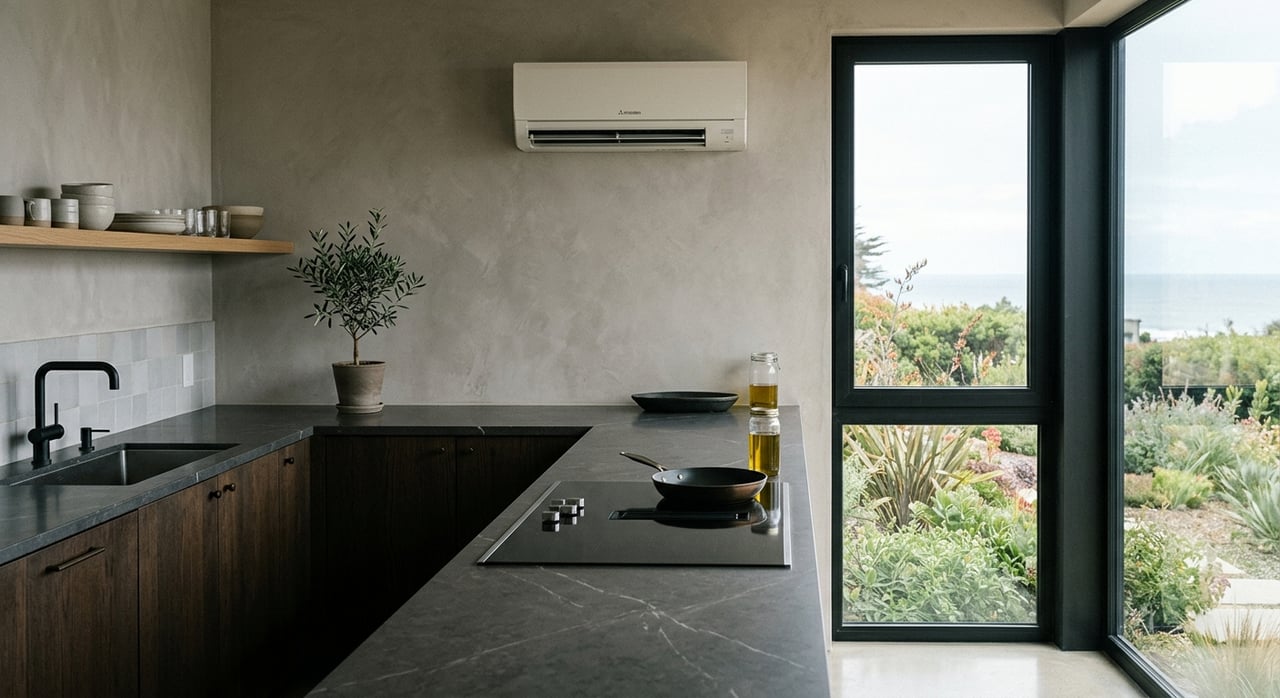
If you are already refreshing your kitchen, induction cooking can be a smart add-on. Marin County has been promoting induction locally, noting in a 2024 release that it is gaining popularity, is more efficient than traditional electric or gas cooktops, and can improve indoor air quality.
ENERGY STAR says induction transfers about 85% of heating energy to cookware, compared with about one-third for gas. DOE says induction cooktops are up to three times more efficient than gas and avoid the indoor air pollutants associated with gas cooking. Those are benefits buyers can quickly understand, especially if they are already interested in healthier indoor living.
MCE lists induction appliances at roughly $600 to $3,000 before rebates. Some projects may also require compatible cookware or electrical upgrades, which Marin County and BayREN both note. That is why induction often makes the most sense when it is part of a broader kitchen refresh or electrical-readiness plan.
Be selective with window replacement
Windows get plenty of attention from buyers, but they are not always the first place to spend. DOE says windows account for 25% to 30% of residential heating and cooling energy use. At the same time, DOE also says that if your existing windows are in good condition, improving their efficiency may be more cost-effective than replacing them outright.
This is where condition matters. If your windows are visibly worn, drafty, single-pane, or out of step with the rest of the home, replacement may make sense. If they are still functioning well, you may get better value by improving air sealing and insulation first.
NAR’s 2024 report found that windows, doors, and siding are among the features clients often care about most. So if your windows are a visual or functional weak spot, this category can matter. If not, it may be better treated as a secondary project.
Treat solar as a conditional upgrade
Solar can be appealing in Marin, but it is not always the first upgrade sellers should prioritize. NAR’s 2024 sustainability report found mixed resale signals. About 31% of agents and brokers said solar increased perceived value, 32% said it had no effect, and 37% said time on market was neither longer nor shorter. In the West, 43% said solar increased perceived value.
That suggests solar can help in some situations, but it is not as consistently compelling as projects tied to comfort, operating costs, or visible condition. If you are deciding where to put prep dollars, solar is often better treated as an optional add-on than a first move. It may make sense when the home, budget, and timeline all support it, but it is usually not the most universal pre-listing investment.
A smart spending ladder for Marin sellers
If you want a practical way to prioritize, use this order as a working guide:
- Home Energy Score or energy assessment
- Air sealing and insulation
- Replace aging HVAC or water-heating equipment with heat pumps
- Add induction cooking or electrical-readiness work
- Consider windows or solar only if they fit the home’s condition and budget
This sequence reflects guidance from BayREN, DOE, and MCE, along with what buyers often notice most. In general, comfort and operating-cost improvements tend to be easier to explain and easier for buyers to appreciate during a showing.
It also helps you avoid overspending on upgrades that do not translate clearly. If a project does not improve comfort, reduce likely operating costs, or noticeably improve visible condition, it may not deserve top billing in your pre-sale budget.
Marin rebates and permit notes to know
It is important to budget with current program status in mind. Marin County’s Electrify Marin rebate program is closed and is not accepting new applications, so you should not rely on that county rebate stream when planning pre-listing work.
There are still useful support paths. BayREN’s Home Energy Score and EASE Home programs remain active, and MCE offers rebate and contractor resources that can help with heat pump HVAC, heat pump water heaters, and electrical upgrades. Marin County also offers permit help pages that can be useful if your project requires permitting.
If your household may qualify, BayREN’s EASE Home program is aimed at moderate-income households and covers weatherization measures such as insulation, duct sealing, air sealing, weatherstripping, and some induction-cooking work, with the customer share capped at 20% of project cost. Program details can change, so it is wise to verify current availability before making final decisions.
Permitting also matters more if you are planning larger work. Marin County says additions and alterations to existing one- and two-family dwellings and townhouses of 500 square feet or more must meet an energy-savings target score starting January 1, 2026. If your listing prep overlaps with a bigger remodel, code requirements should be part of the plan from the start.
How to choose the right project for your sale
The best upgrade plan depends on your home’s condition, your listing timeline, and how much prep work you want to take on. A house with obvious drafts and an old furnace needs a different strategy than a well-maintained home that just needs a kitchen update. The goal is not to do everything. It is to choose the improvements that create the clearest buyer value.
In Marin, the strongest green upgrades are often the ones that feel both practical and easy to market. Better comfort. Lower operating costs. Cleaner-looking systems. A more polished kitchen. These are the details that can support stronger buyer interest because they connect directly to daily life.
If you are preparing to sell, it helps to have a plan that balances sustainability, budget, and presentation. That is where thoughtful pre-listing guidance can make a real difference. If you want help deciding which upgrades are worth doing before you list, Lucinda Otto can help you evaluate your home, coordinate smart prep work, and position those improvements clearly for Marin buyers.
FAQs
What is the best first green upgrade before selling a Marin home?
- For most sellers, the best first step is a home energy assessment or Home Energy Score followed by air sealing and insulation, because these upgrades improve comfort and efficiency without requiring a major remodel.
Should I replace windows before listing a Marin property?
- Usually only if the windows are failing, drafty, single-pane, or visually dated. If they are in good condition, improving the home envelope first may be more cost-effective.
Are heat pumps worth installing before selling in Marin County?
- They can be, especially if your current HVAC or water heater is aging. Heat pumps offer efficiency benefits, and they align with Marin’s broader electrification direction and Bay Area appliance rules.
Is induction cooking a good pre-sale upgrade for Marin sellers?
- It can be a strong choice when you are already updating the kitchen, because it is efficient, increasingly popular locally, and often less expensive than replacing major HVAC equipment.
Is solar the best green investment before selling in Marin?
- Not always. Solar can help in some cases, but resale signals are more mixed than for upgrades tied to comfort, operating costs, and visible condition.
Are there Marin rebates for pre-listing electrification projects?
- Marin County’s Electrify Marin rebate program is closed, but BayREN and MCE still offer active program pathways and resources that may help, depending on the project and current availability.